
Marketing agency / level design & in-house coding agency
25 New game levels every week. With no external token costs.
A marketing agency took over an existing mobile puzzle game but ran into difficulties when creating new levels. AITJE analysed the game, built a reusable level design system and linked AITJE Coder to Qwen on its own server. Now, the agency 25 creates new levels every week from a single assignment in OpenCode.

The marketing agency’s enquiry
The game was live.
How do you proceed?
The marketing agency had acquired a mobile game from a development agency. It was a puzzle game in the style of Candy Crush: the app was fully functional and already live. The agency was able to market the game, but had less experience in managing and expanding the code.
New levels became the stumbling block. A marketer used AI to build them, but each task essentially started from scratch. There was no fixed system for the structure, reusable components or the level of difficulty. As a result, gaps kept appearing in the process.
One prompt per level.
Isolated AI projects, a lack of overview and constantly having to work out how to build the next level.
A system for the range.
Existing levels as a basis, reusable components and a record of pace and difficulty.
The foundation for new levels
Structure first.
Then variation.
An agent needs more than just ‘come up with a new level’. AITJE provided the brief: what already exists, which elements are usable and how does the next level fit into the series?
Analysing existing levels
AITJE We examined how the existing levels were structured and what patterns, rhythms and difficulty levels were already present in the game. The existing game formed the starting point for the expansion.
Making components reusable
This led to the creation of a level design system with reusable components. New levels build on the game’s structure, allowing the agent to vary its approach in a targeted manner whilst maintaining a recognisable style.
Keep track of the structure in CSV
CSV files track which rhythms and difficulty levels already appear in each level. This information provides the agent with context for subsequent levels, rather than being given a separate task each time without an overview.
Leveldesign in pictures
Not every level
the same challenge.
The CSV overview tracks which rhythms and difficulty levels already exist. Together with the components, this provides the coding agent with a basis for creating new variations that fit the game.
- Difficulty
- Low
- Rhythm
- Get to know us → practise
A schematic explanation of level variation; no screenshot or level data from the client’s game.
This is how the agency currently uses it
One project.
A whole series of levels.
The marketer works in the correct repository via OpenCode and the ‘AITJE Coder’ methodology. The existing code, the design system and the level overview together form the context for the agent.
“25, create new levels based on our level design system and the existing level registration.”
An example of the assignment, not a verbatim client log.- 01
Opening the correct repository
The marketer opens the game project in OpenCode using the ‘AITJE Coder’ approach. In this way, the agent works with the game’s existing code, components and level design system.
- 02
A series of questions covering25-levels
The brief is now clear: create new levels for 25 based on the design system and the existing level registration. The rules and context are already set out in the project.
- 03
Let Qwen carry on working
The agent uses a Qwen3 API endpoint (6-35B-A3B) on a server under its own management. The development loop generates the level sequence using the reusable components and the information on pace and difficulty.
- 04
Building on the system
The agency is currently operating at a rate of 25 new levels per week. New projects use the same foundation, making scaling up a repeatable process.
The API connects the agent to the in-house model. There is no external provider that charges per token.
The model behind the agent
Qwen in-house.
For this workflow, the agency uses Qwen3.6-35B-A3B from Alibaba’s Qwen team. This open model has approximately 35 billion parameters, of which approximately 3 billion are active per token. This Mixture-of-Experts architecture utilises a portion of the model for each processing step.
The model runs on the client’s own managed server and is provided via an API endpoint. OpenCode uses that endpoint to process the learning tasks. In this context, a ‘proprietary API’ therefore refers to a connection to the client’s own computing environment.
€0 external token costs.
The server, management and electricity remain cost items. The case does not claim to offer free infrastructure or development.
The result
From individual ideas
to 25 levels per week.
The agency has a way of further developing the game it has acquired, without the marketer having to reinvent the entire process every time. AITJE combined software engineering, level design and a coding agent into a workflow that suits the people working with it.
The weekly figure is the result for this game and this setup. The approach makes new levels repeatable; playability and the final release remain part of managing the game.
More than just connecting a model.
The difference lies in the system surrounding it: understanding the code, making components reusable and providing the agent with the correct context.
Discover AITJE CoderHave a bespoke workflow builtOther case studies


Development agency / Assistant, Coder & model management
Ten models. One team. Control and independence.
AITJE set up a shared AI environment for a development agency, featuring Assistent, Coder and ten models to choose from. A shared token pool of €350 per month replaces nine subscriptions to €200. Model usage and token costs per task can be tracked via Asana.
View the approach

Marketing / customer management, tickets & business knowledge
350 clients. One central workspace.
Following a takeover, a marketing company’s client base grew from 150 to 350. AITJE brought together client data, tickets, projects, invoicing information and call transcripts in a central hub. Staff can search for and chat with their business experts, with access based on their role and AI integrated into an existing Mac mini.
View the approach
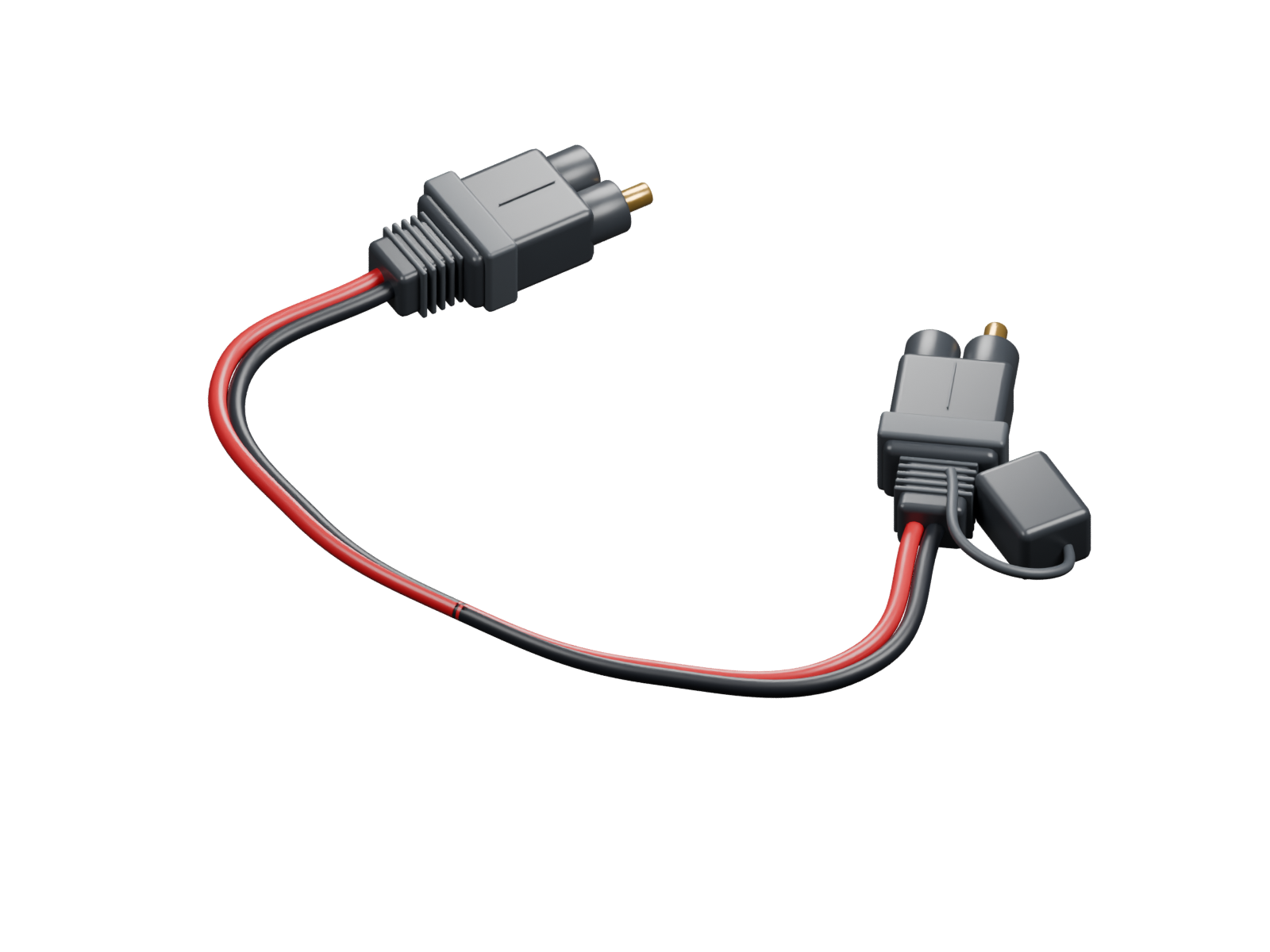
Power leads / 3D catalogue & workflow optimisation
From technical drawing to 3D product model.
AITJE built a workflow for a partner specialising in contact cables that converts product data and technical drawings from WordPress into 3D models. AITJE Coder controls Blender; Three.js makes the GLB files usable on the website. Following optimisation, API costs fell from approximately €9 to €0.11–€0.18 per product.
View the approachMOVING FORWARD TOGETHER WITH AI
Your next step begins with a question.
Got an idea, facing a challenge, or simply curious? Tell us what you want to achieve. AITJE will work with you to find a solution.